
When people think about healthcare logistics, they often imagine trucks, warehouses, or deliveries moving from one location to another. But behind every successful vaccine administration, laboratory diagnosis, and clinical trial is an invisible system working tirelessly to protect the integrity of life-saving medical products—the cold chain.
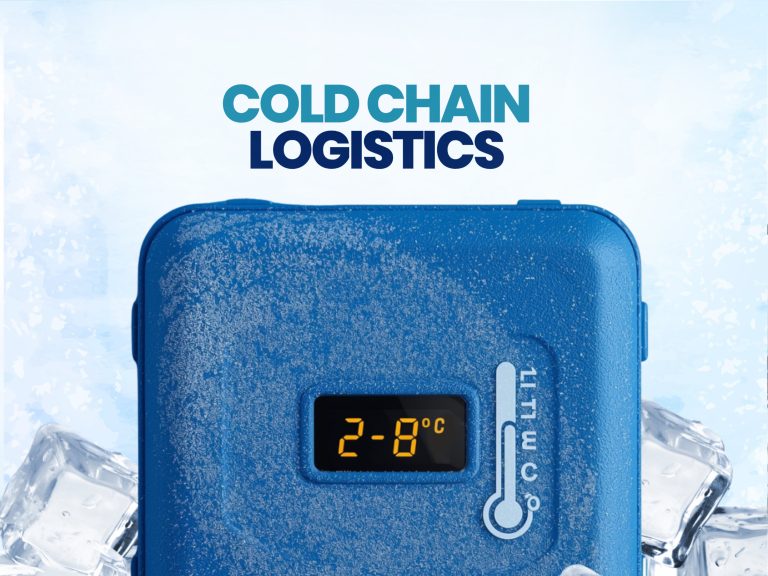
Cold chain logistics is the process of storing and transporting temperature-sensitive medical products within carefully controlled temperature ranges from the point of manufacture to the point of use. It is one of the most critical components of the healthcare supply chain because many pharmaceuticals, vaccines, biological samples, and investigational products can lose their effectiveness if exposed to temperatures outside their recommended range—even for a short period.
Why Is Cold Chain Logistics So Important?
Imagine a vaccine that has been developed after years of scientific research and rigorous clinical trials. If that vaccine is exposed to temperatures that are too high or too low during transportation, its potency may be reduced. Although it may appear unchanged, it may no longer provide the level of protection it was designed to deliver.
The same applies to laboratory specimens, blood products, biologics, insulin, oncology medications, and clinical trial materials. A seemingly minor temperature excursion can compromise product quality, affect research outcomes, delay patient treatment, and lead to significant financial losses.
In healthcare, maintaining the correct temperature isn’t simply a quality requirement—it’s a patient safety requirement.
What Does a Cold Chain Involve?
An effective cold chain relies on much more than refrigerated vehicles. It is a coordinated system that includes:
• Temperature-controlled storage facilities
• Qualified packaging materials
• Refrigerated transportation
• Continuous temperature monitoring
• Data loggers and real-time tracking
• Proper handling procedures
• Trained logistics personnel
Every step of the journey is monitored to ensure products remain within their specified temperature range until they safely reach hospitals, pharmacies, laboratories, research sites, or patients.
Cold Chain and Clinical Research
For clinical trials, cold chain logistics plays an especially important role.
Investigational medicinal products (IMPs), biological samples, vaccines, and laboratory specimens often require strict temperature control throughout the study. Failure to maintain these conditions can compromise sample integrity, affect research data, delay studies, and potentially impact patient safety.
Reliable cold chain management helps ensure that researchers can trust the quality of the products and samples used throughout a clinical trial, contributing to more accurate study outcomes and regulatory compliance.
Supporting Better Healthcare Outcomes
Strong cold chain systems do more than preserve products—they strengthen healthcare delivery.
They help healthcare providers administer safe and effective treatments, support laboratories in delivering accurate diagnostic results, reduce product waste, improve supply chain efficiency, and ensure patients receive medicines that perform exactly as intended.
As healthcare continues to evolve, the demand for reliable cold chain logistics will only increase, particularly with the growth of biologics, personalized medicine, advanced vaccines, and global clinical research.
At Clinique Logistics
At Clinique Logistics, we recognize that every shipment carries more than a product—it carries the trust of healthcare professionals, researchers, and patients.
Our commitment is to deliver healthcare logistics solutions that prioritize precision, compliance, transparency, and temperature integrity every step of the way. Because every degree matters, and every delivery has the potential to improve lives.
💬 Let’s hear from you!
Temperature control is critical in healthcare logistics, but many people don’t realize how much depends on it.
What do you think is the biggest challenge in maintaining an effective cold chain in Africa?
Is it infrastructure, transportation, power supply, training, technology, regulatory compliance, or something else?
Share your thoughts in the comments—we’d love to hear your perspective and continue the conversation.